
Did Queen Elizabeth I lose control in the 1590’s?
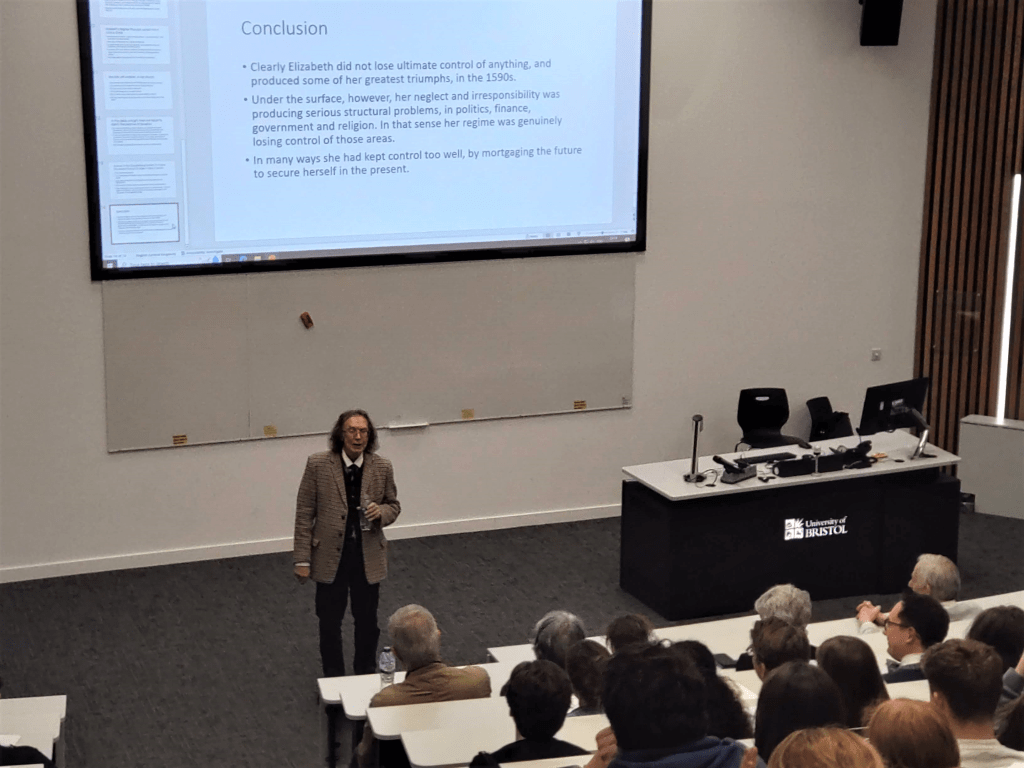
Professor Hutton gave another highly popular and relevant lecture for the Bristol Historical Association with our biggest audience this year, 136 including 91 local students from ten schools. Professor Hutton tackled what has been known among Tudor historians as the “neglected nineties.” He opened by giving a clear picture of all the lasting achievements of Elizabeth that were well in place in the 1590’s, after forty years of successful rule, including a poor relief system, good relations with England’s traditional enemies and the extension of the Crown’s powers. However, he then began to chip away at our familiar picture by outlining some of problems of the decade. He argued that the deaths of many of her most reliable courtiers like Raleigh, Burghley and Leicester made her a more marginalised figure. Her weakness for “silly young men with gorgeous legs” reached its height with the worst of them of all, the Earl of Essex so “chronically stupid” he should never have been allowed a role in political life.
A rather tragic picture of an elderly queen was presented from the perspective of foreign ambassadors who commented that she was still dressing like a young woman and jealous of her ladies in waiting who were young and attractive. The court was reported as “weary of old woman’s government.” More importantly the onset of corruption and selling of offices painted a picture of government shoring up problems that the Stuarts would be faced with. Underpaid crown servants had to use corruption to pay their staff and even the upright Burghley and his son were part of this system. By the late 1590’s corruption was endemic and Edmund Spencer declared “nothing was done without a fee”. When Parliament faced Elizabeth with the problem in 1601 and a bill to deal with it, she managed to talk her way out of the situation with her customary political skill but the problem remained.
Similarly religion was presented as not the grand compromise but an unresolved problem that other national Protestant states had worked out. As a result, at the end of Elizabeth’s reign new destabilising movements were massing. The Arminianism versus Puritanism conflict was gathering force. The religious fault lines divided counties (such as the East and West Ridings of Yorkshire) and parishes.
The conclusion was that Elizabeth never lost ultimate control and retained her charisma and intelligence but the problems that were amassing under the last years of her rule were an explosion waiting to happen in the seventeenth century. Her successful reign had mortgaged the future of her kingdom. After this thought provoking lecture there was a range of very well informed questions from the audience and some decisive and witty replies from our speaker.
 Bristol Historical Association