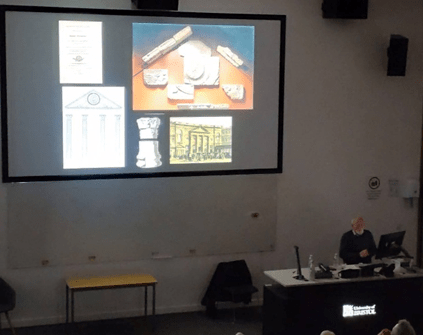
Our third lecture this year was a very special event. We had an audience of 84, including our loyal members, guests, local teachers and 19 sixth formers from six local schools. Professor Sir Barry Cunliffe returned to the university where he had been a young lecturer in the 1960s to examine the way archaeologists, including himself, have uncovered the Roman History of Bath’s sacred spring. This warm water spring which produces a quarter million gallons of water a day had been known since prehistoric times.
Professor Cunliffe shared maps from the 17th century when it was treated as local spectacle and the 18th century when it became a fashionable resort. During this period the gilded head of Minerva was discovered.
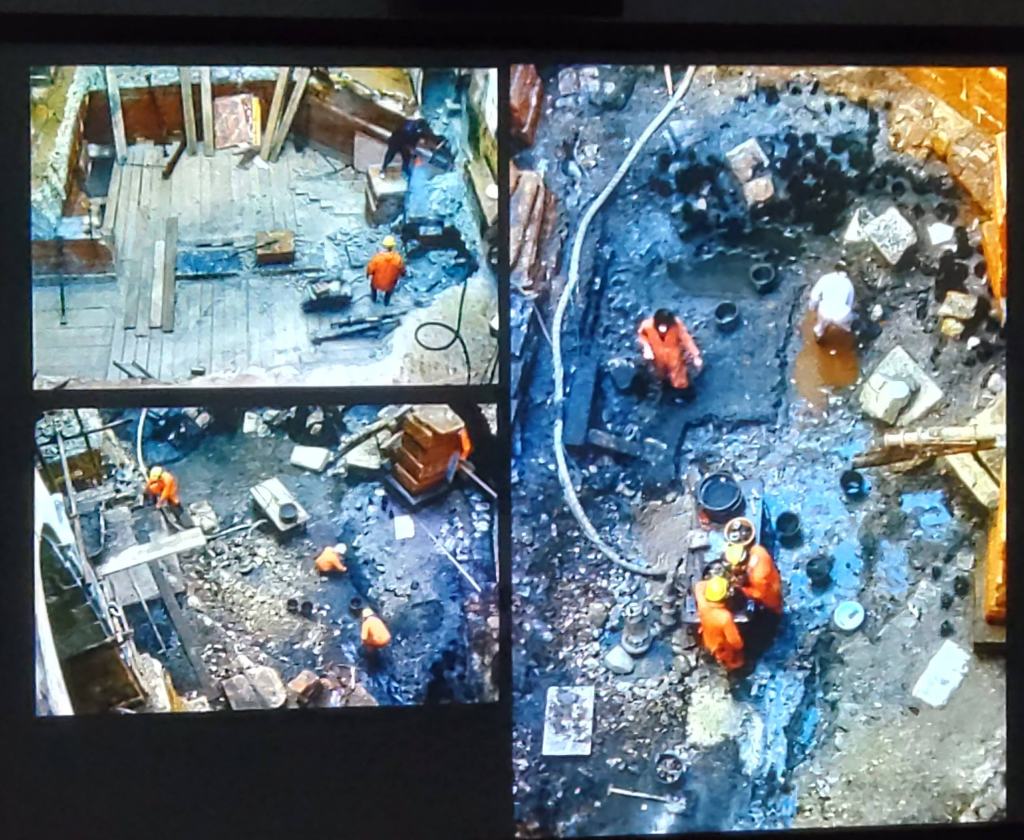
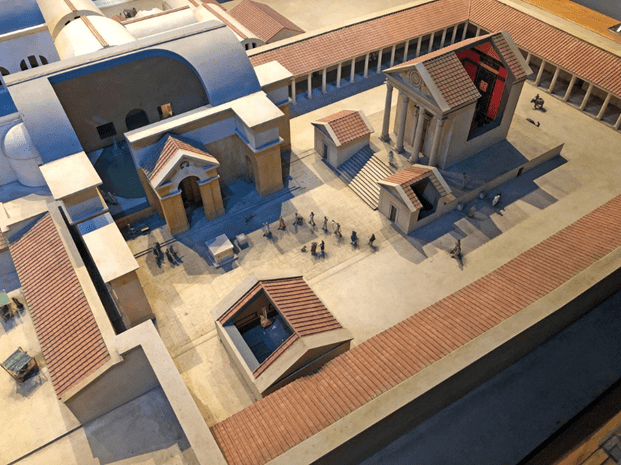
The subsequent expansion of the city meant builders uncovered much included the First century pediment of the Temple and the style of the new buildings such as John Palmer’s Pump Rooms for example, were influenced by these findings. However, the emergence of Bath from the mud was often stop-go. The next period of exploration involved a number of eminent Victorians including a scholarly vicar HM Scarfe, Major Davis, James Irvine, and the builder Richard Mann. Irvine came in for particular praise from Professor Cunliffe for his detailed drawings and meticulous documentation of Roman remains, which proved invaluable for later excavations. Experts in the early twentieth century, notably Professor Francis Haverfield dismissed Irvine’s finding and in the 1950s archaeologists Toynbee and Richardson admitted they were still unsure exactly where the Roman temple in Bath had been. In the 1960s a new phase of exploration of Bath began and Barry Cunliffe was appointed Director of Excavation in 1963 just as he had become a lecturer at nearby Bristol University. He shared with us photographs of archaeological digs when Health and Safety had not been considered and the stunning discoveries made by archaeologists both professionals and volunteers. His most vivid memory was of uncovering from the mud statues of two Roman gods from the corner stone of the altar (Bachus and a female figure), while above ground on Small Street he could hear a Salvation Army band playing ‘Hark the Herald angel sing.’ The excitement of archaeology was made real for our audience. In 1974 his team were given the chance to go underneath the Pump Room and clear the cellar floor as long as it was always open to visitors. This Temple Precinct excavation increased Bath’s visitors to one million. Vast discoveries were made but in 1978 tragedy struck when a link was found between the water in the hot springs and a form of meningitis, leading to the closure of the baths. However, with Health and Safety now firmly embedded the archaeologists (wearing face masks and special clothing) explored the Roman engineering that created Aquae Sulis. Barry’s enthusiasm delighted our audience. He has played a crucial role in piecing together the jigsaw that is the Roman Baths complex. We were able to share the excitement and drama as the archaeologists made new discoveries in the mud.
 Bristol Historical Association