
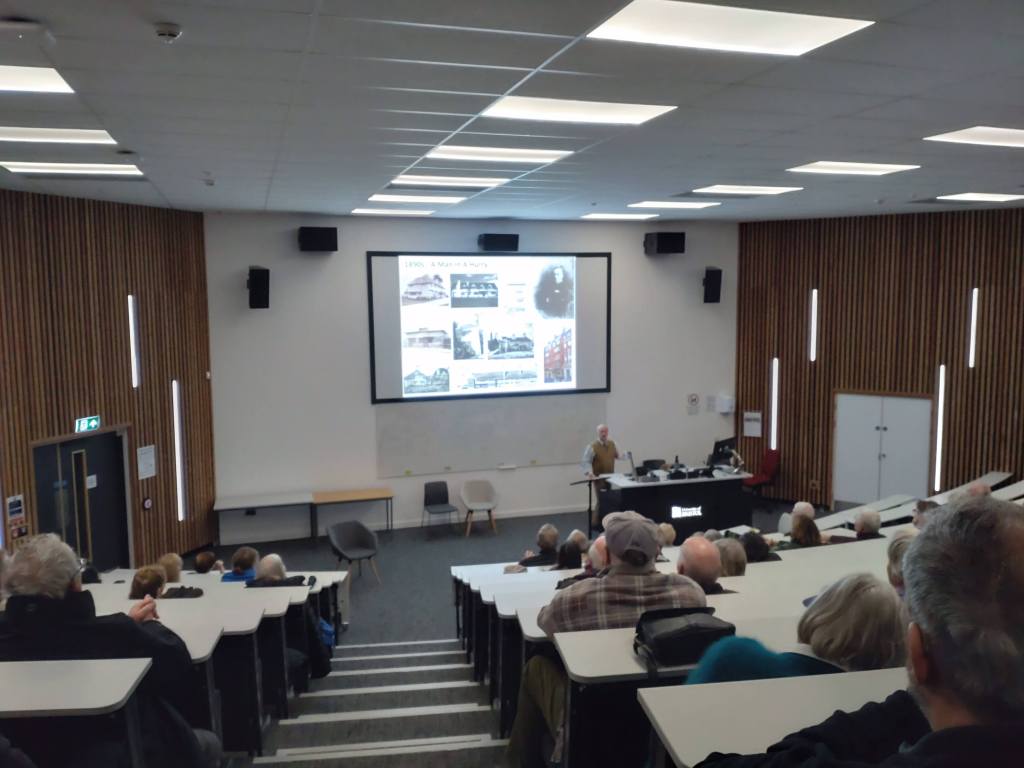
Professor Ian Hamerton shared his enthusiasm and expertise on the Arts and Craft Architect and Designer Charles Frances Annesley Voysey with the Bristol Branch last Wednesday. Voysey’s father and large family had a key impact on Voysey. He was descended from the Wesleys. The massive scandal around his father (who lost his living as a curate for his beliefs on eternal damnation) led Voysey down an unusual path. His training as an architect with three different architects created a gifted young architect who had built an extensive practice by the 1890s. Professor Hamerton outlined the distinctive aspects of the Voysey house using Voysey’s original design drawings. The early sketches showed half-timbering and vernacular designs not unlike those of contemporaries like Renee Mackintosh but over time a very distinctive Voysey style emerged.
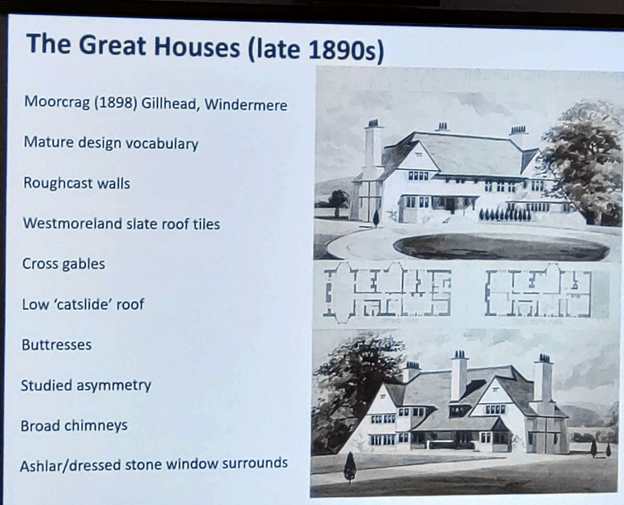
In all 117 Voysey houses exist, although many other builders copied his style. Professor Hamerton literally took us through one of the most successful Voysey houses, Moor Crag in Gillhead near Windermere. Features like the broad welcoming front door, the circular windows, the low catslide roof, the broad chimneys and the asymmetrical design were not just illustrated but explained in terms of Voysey’s own beliefs on architecture. Voysey’s brilliant collaboration with builders and artisans (like Thomas Elsley) meant the houses included motifs like the heart shape that linked to the religious ideas of the Voysey family. Almost no detail was too small for Voysey the designer. Voysey’s designs of some offices have survived better than the insides of his houses including the Essex and Suffolk Equitable Insurance Company Office. Voysey sadly had less work after the First World War as an architect of houses but his work as a textile, wallpaper and clock designer and even a designer of his own clothes showed his versatility and surprising playfulness. Many of us in the audience were inspired on a very wet Wednesday evening to plan visits to the Voysey houses that exist in England over the coming months.
 Bristol Historical Association