Dr Vivian Kong, University of Bristol
Wednesday 11th February 2026
Dr Kong began her lecture by setting the context of the British colony (1841-1997). She Illustrated the rosy and nostalgic view of Britishness and British rule that some Hong Kongers now have of British rule. She showed long queues to sign the official condolence book after Queen Elizabeth’s death and the letter sent by school students in 2019 to ask for help during the anti-government protest crisis. The letter was full of references to British history including ‘our darkest hour.’ These modern events fly in the face of the unfairness of historic British colonialism. Her research and recent book have explored the reality of what it meant to identify as British in Hong Kong in the period from 1910-45. The multiracial society of Hong Kong included varieties of Chinese peoples, the White British, Eurasian mixed race, the local Portuguese and Macanese and many other racial groups. Dr Kong had used a range of sources including the archives of her own university )Hong Kong University) and oral history research which took her to Australia and California.
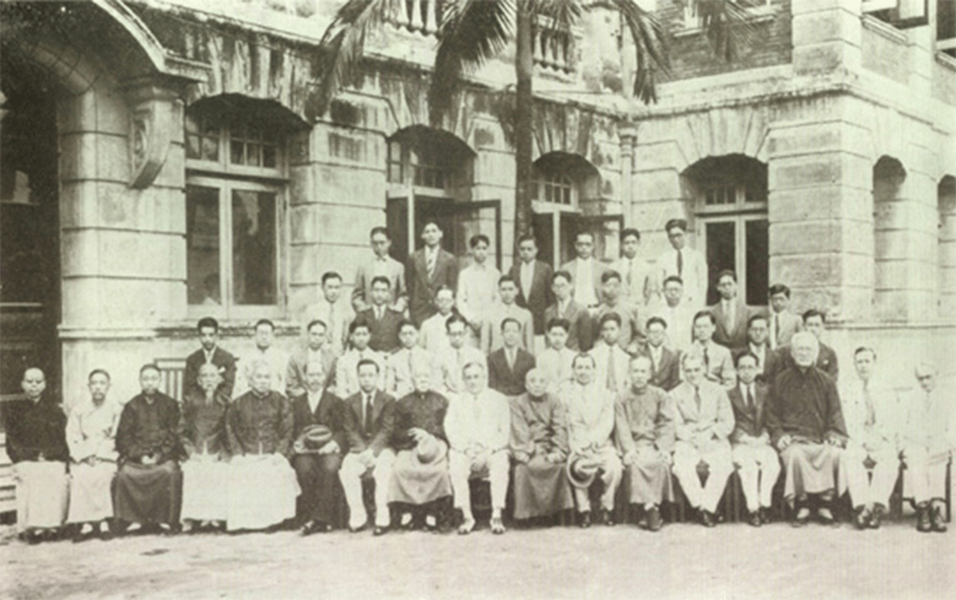
Dr Kong explored the different ways in which people identified as British. This included the legal right to a British passport and service in the Armed forces. The Kew archives had uncovered how the British Government had tried to restrict access to full British passports but increasingly by the 1920s some Hong Kongers knew their rights and were able to travel to the UK. The aim of opening a university in Hong Kong was also examined as a way for the British to influence mainland China by educating subsidised Chinese students alongside more Westernised Hong Kong and overseas Asia students. When Chinese Nationalist protests happened in Hong Kong in 1925 against British colonialism students were careful to stay separate from it despite their admiration for their own culture they did not want to forgo their scholarships.
Another aspect of British rule was the censorship of the Press and the treatment of the local Portuguese and Macanese mixed race communities. These groups engaged with Britishness, sending their children to Catholic English speaking schools. In these schools children sang the British National Anthem, joined the Scouts, and took part in Empire Day. As adults these communities more often spoke English than patois or Portuguese and took part in military service. A typical member of this community was Dr Eddie Gesano a mixed race Macanese doctor. He noted the discrimination he experienced as doctor who was paid only 25% of an Irish anaesthetist in the same hospital. Despite this discrimination there were attempts to build bridges between the communities and it was seen as a protection against Chinese Nationalism. In many ways they were protecting their class and economic interests.
Dr Kong showed how the Macanese and Portuguese communities despite their service in 2nd World War were not recognised as British citizens and as a result many left to go to other English speaking parts of the world including California in the USA, Canada, and Australia (where she interviewed some of them). Many of the issues raised in the lecture are still highly relevant not just to modern day Hong Kong and its relationship with Communist China but to multiracial Britain and how different communities identify with the dominant nationality. The lecture was followed with some excellent questions, including several from members who had visited or worked in Hong Kong before 1997.
 Bristol Historical Association