We’ve now done two live lectures in the large lecture theatre at 7 Woodland Road. We would like to reassure anyone that is slightly nervous about coming out that it is only a hop skip and a jump from the door at number 7 to the lecture theatre. The theatre is very large and gives ample room for social distancing. Parking in the nearby streets is free after 7pm. Hope to see you soon.
Author: bristolha
WE ARE GOING LIVE.
Our next event has been moved from Wednesday 16th February to Wednesday 23rd February. We will be in the lecture theatre at 7 Woodland Road. Dr Misha Ewen is coming from Brighton to talk about ‘Sugar, Silk & Slaves: English Women’s Participation in 17th Century Colonialism’
The lecture starts at 7.30pm but please arrive early. Members will need to sign in.
A HUGE THANKYOU TO EVAN JONES for his excellent lecture on the plague in Bristol.
A recording is on our video page.
Edson Burton. Black Activism in Bristol from c1963 to 2021.
Our final lecture this year was a fascinating and informative survey around the History of Black Activism in Bristol
Edson Burton’s lecture covered the small pockets of immigration that existed in Bristol before the Windrush generation. The first cadre which included many ex-servicemen and the gradual build up of a Black Community of thousands by the 1960’s. Edson’s research which had included interviews with many of that first and second generation showed the colour bar that excluded many well educated individuals from the West Indies from skilled and professional work. The Bristol Bus Boycott inspired by the American Black Civil Rights Movement was compared with the St Paul’s Riots of 1980. The established narrative about the reaction of political parties to the Boycott which appears in school textbooks was challenged. Edson described the reaction of the generation coming to maturity in the 1970’s who were facing discrimination at school and police harassment on a daily basis and how some were attracted to Rastafarianism. Black Bristolians felt safe in St Paul’s and they saw the police raid on the Black and White Café in 1980 as an attack on the heart of their community. In the aftermath of the riots Edson explored how the community had built up its new institutions to service its community and how problems nevertheless continued. The campaign Justice for Judah for the wrongful tasering of a black community constable in 2017 and the Black Lives Matter Campaign of 2016 involving a younger black community and led by local activists were compared to the 1963 Bus Boycott. The Q & A which followed led to some sharing of personal recollections about the attitudes of other parts of the city to St Paul’s including the stigmatizing of it as an unsafe crime ridden area, the memories of eyewitnesses in 1980. Edson’s talk also drew attention to the wider St Paul’s community which included immigrants from Poland and Ukraine and the common ground with other areas of the city like white Southmead. A fascinating end to the term.
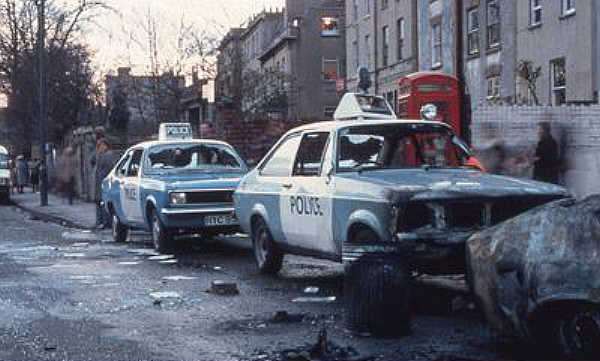

GREAT DEBATE. DEcember 1st 2021.
A massive thankyou to all the teachers and students who spent a great deal of time preparing for and taking part in the GREAT DEBATE. We had ten sixth form historians taking part. The question was…
The 70-year reign of Queen Elizabeth II has seen global and widespread changes including in: societal infrastructure, industry, rural life, the environment, and ideas: Which changes of the last 70 years have affected your local area the most?
The three judges (Adam Vaitilingam QC, Mary Feerick and Clare Deering) were very impressed with the high standard of the presentations.
The debate was recorded. If you are a student or teacher please contact Rob who will give you a link.
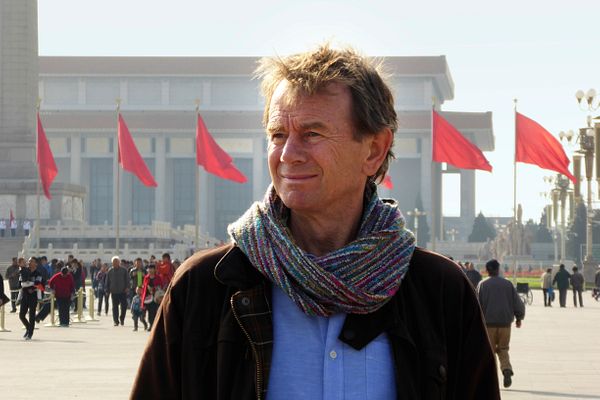
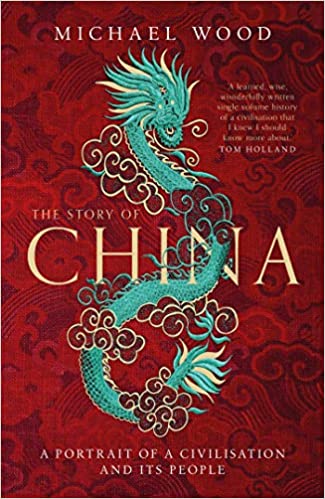
Michael Wood Wednesday 24th November 2021.
The Story of China – Voices from the Chinese Past
Last night Michael Wood Professor of Public History and a film maker who has produced an unmatched range of History programmes over his long career attempted what might seem an impossible task. How in forty five minutes do you cover the History of the world’s longest civilised state with the largest population in the world? Michael brought it to life by selecting five distinctive voices from China’s past. In a journey from the 2nd century BC to the 20th century he selected a poet, an historian, a female autobiographer, an emperor and a feminist.
The Chinese voices brought to life this remarkable country about which so many of us would admit we know far too little. Starting with tradition of Chinese poetry that went back further than Homer he introduce Du Fu from the eighth century whose work he compared with Shakespeare and Dante in its importance and humanity. Quoting his experiences in losing his young son in a famine caused by war “Brooding on what I have lived through, if even I know such suffering, how much worse is the life of the common man”.
The historian Sima Qian of the Han Dynasty was his next voice. An historian whose accurate accounts had led modern archaeologists to undercover amazing finds and who used interviews with ordinary people as sources and wrote objective accounts long before such ideas were considered in European History. Even more extraordinary was his decision to honour a promise to his father to complete the history by suffering the terrible punishment of castration. “A man has only one death. That death may be as weighty as Mount Tai or it may be as light as a goose feather. It all depends on the way he uses it.”
The twelfth century Li Qingzhao a female autobiographical writer was his next voice writing at the time of the invention of printing her ground-breaking account of her marriages and her ability to get a divorce from her abusive second husband was extraordinary enough but her comments at the fall of a dynasty and criticisms of men’s handling of affairs are pithy and lively.
After this Michael went on to Xuanye the first Emperor of the Qing dynasty who ruled from 1654 for over sixty years and epitomised the sage emperor giving wise advice to his successors to “look after the people…considerate to officials…to be diligent…and treat their people with balance”. Not always advice followed by his successors!
Finally, Michael gave us the voice of the Chinese feminist Qiu Jin born in 1875 who wrote that true equality could never be just about class
Don’t speak of how women can’t become heroes:
alone, I rode the winds eastward, for ten thousand leagues.
…abolish the rule of men.
After the talk we had a really enthusiastic Q & A session and Michael brought us up to date with answers that showed the problems of modern historians in China and abroad writing honestly about the Communist era. The state refuses to admit that any mistakes have been made since 1949. Michael revealed that last chapter of his own book had been removed before going on sale in China.
Review Mary Feerick
Dr Lyndsey Jenkins Lecture on Post War Labour Women MPs
Lyndsey Jenkins lecture based on her forthcoming book on Labour Women MPs in the period from
Attlee to Thatcher included the names not just of well known figures like Jennie Lee and Barbara
Castle but less well known figures at a time when female MPs never reached more than 4% of the
House but in 1945 Labour had more women MPs with 21 than they would have again until 1987! In
an era when all consumers coped with rationing these exceptional women stressed their role as
housewives to find common ground as citizens with other voters. These politicians stressed the
tough struggles of austerity Britain, shortages of baby clothes, the queues for food, the carrying of
shopping on the bus and the struggles with exhausting housework long before the labour saving
devices associated with consumerist Britain. They used the same rhetoric that recognized the skills
of the housewife that are so often associated with the success of Mrs Thatcher in 1970’s and ‘80’s.
Lyndsey’s lecture also described the barriers these women faced in a 96% male House of Commons.
As well as a disrespectful press, a Speaker who often failed to give them the opportunity to speak
the Labour Party seldom gave them safe seats to contest so they had to excellent campaigners.
Unlike the pioneering first women MPs 1919-39 these women in the era of National Health Service
spoke about the issues around pain relief for childbirth and were not afraid to refer to their own
experiences. Although not using the language of the Feminists MPs of a later era they raised the
issue of respect for mothers and housewives as equal contributors to society. They also campaigned
for equal pay for professional women. As usual once the lecture ended a lot of lively questions
ensued on this clearly neglected party of Labour’s History and the Bristol HA is really looking forward
to Dr Jenkins forthcoming book.

STEPHEN BOURNE. THIRTY YEARS OF WRITING BLACK BRITISH HISTORY
Stephen Bourne gave a really fascinating insight into his career as a self-taught historian in last night’s talk. Stephen’s initial book Aunt Esther’s Story which came out thirty years ago was based on his link to the older women in his family whose stories of their experiences on the Home Front in Second World War London fascinated him when he “bunked off” school in the 1970’s. He co-wrote a book with his black aunt Esther. Esther was adopted into his warm working class family when she lost her parents. This book led him into a world of research and writing having left school with few qualifications. With funding available for community History Stephen has been a pioneer in piecing together the jigsaw pieces of British Black History. He wrote for the vast array of independent magazines available in the 1990’s including The Voice, Race Today and The Caribbean Times. Stephen struggled to get his books published without a literary agent and but once they were published, they sold! There was and is a real audience for Black British History and particularly for the voice of Black Britons telling their own stories. His books have included work on the Black Home Front in both wars, Black Servicemen as well as writing about Gay History. Black Poppies which first came out in 2014 was republished in 2019. Stephen’s books are on areas that today would form a PhD thesis but then he was pioneering Black History before such topics were being taught in universities. Stephen was refreshingly honest and open about the barriers facing him including lack of interest at the BBC and told a great story about the enthusiastic reception he got from 13 year old Liverpool school children and bus drivers. His latest project is working on a children’s version of Black Poppies to be used in his local London schools because of the lack of resources. While understanding why teachers taught American Black Civil Rights, he urged the need for more inclusivity of Black British History because this subject is essential for our children. Now recognized by the academic establishment with an Honorary Fellowship Stephen reminded so many of us that we learnt History first by listening to the stories of our families and for some of us by not finding ourselves in the version of History served up for us in our schools and universities.
Stephen’s website https://stephenbourne.co.uk/books/


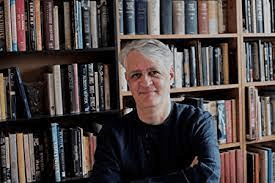
TIM COLE’s Lecture. ABOUT BRITAIN.
Our first lecture of the new season. Wednesday 6th October.
Tim explored some of the fascinating journeys he took using the maps produced during the Festival of Britain year (1951). The aim was to see how Britain had changed over a seventy year period for his new book About Britain. His journey from Canterbury to Margate beginning on the Roman Stone Street was soon interrupted by the M20. He showed us the Airport Café that is all that remains of the airport which once hosted the Silver Airways Company where people drove their cars onto planes, replaced in the 1960’s by ferries. These changing transport technologies touched on Britain’s flirtation with the Hovercraft which disappeared in the 1970’s. The two themes he took were how our thinking had changed about land and about the past. How land had gone from being cleared in East Anglia to being reclaimed. How the 1950’s writers of these guidebooks especially WG Hoskins view of an upward trajectory of progress has been replaced by conservation and attempts to put back what had been “destroyed”. This included on his Welsh journey the eradication in the 1990’s of the Rhododendrons in Snowdonia and the bringing back of original plants and rewilding. The guidebooks had offered a very bucolic eternal view of the English landscape and seemed to go out of the way to ignore our Victorian industrial heritage (“dull” “boot and shoe” and “hosiery towns”). Since the 1970’s industrial archaeology had seen a point in preserving this part of the landscape. Our Victorian and even Twentieth century landscape was now being appreciated including the preservation of Preston Bus Station! Tim’s thought-provoking lecture finished with speculation on what his children might find if they undertook a similar journey in seventy years’ time. Question and Answers followed including what for Tim had been the most positive and saddest change he had found – A Viking ship replica in Kent and the neglected town of Burnley were the answers.

 Bristol Historical Association