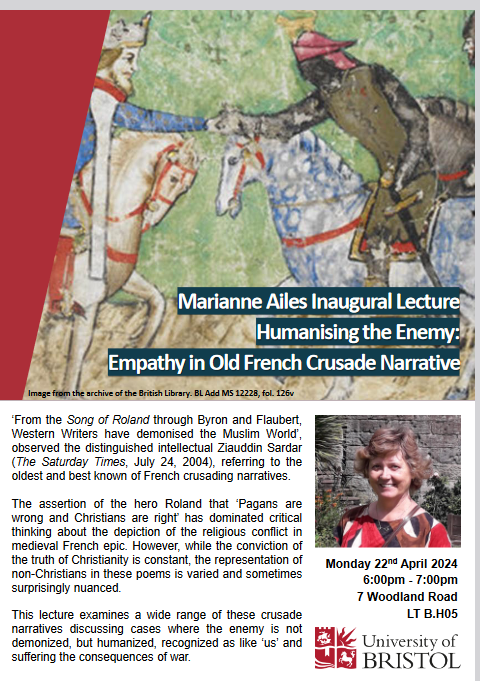
Lecture Monday 22nd April
Eugene Byrne Wednesday 21st February 2024
Local historian and Journalist Eugene Byrne gave a really amusing and insightful talk based on over four decades of working in Bristol. Most of his research is of course carried out in the archives but quite often he has used tales told to him by ‘a man in the pub’.
The key phrase often used when journalists come across an attention grabbing story is that it is probably ‘too good to check’.
We started with the story of Tollgate House. When this eyesore was demolished in 2006, it was claimed that a huge cannabis farm was found on the top floor. Then there was the story of the man who told his partner that he wanted to split up and could she remove her belongings whilst he was away on business. When he returned he found the telephone receiver had been left hanging loose. His partner had phoned the speaking clock in Melbourne, Australia. The telephone bill was thousands of pounds.
Many of the stories crop up all over the world. These include stories about dogs in restaurant freezers or the story of the vanishing hitchhiker. More recently archaeologists tried to find the ‘Kingswood elephant’ which had apparently died when a touring circus visited Kingswood in the nineteenth century. It was said to be buried in a local churchyard. It has never been found.
In the nineteenth century newspapers published tall tales to increase circulation. Bristol had two rival newspapers. John Latimer was the editor of the Bristol Mercury from 1858 to 1883. He was passionate about local history and as a Unitarian keen to print the truth. The rival Bristol Times was edited by the romantic Tory Irishman Joseph Leech. He certainly never let the facts get in the way of a good story (a nineteenth century Boris Johnson). Leech liked stories about the supernatural.
A big story in the Bristol Times (and told by Eugene in the Bristol Post) was the tale of Dr Frederick William Blomberg. He had been chaplain and private secretary to the Prince of Wales (later George IV). Thanks to royal influence he was appointed to many well-paid sinecures within the Church, though he did very little work in any of them. Blomberg was appointed Prebendary of Bristol in 1790, at the age of just 28. Why had this man received so much royal favour? Blomberg’s father, the story went, had been an army officer who had secretly married a young woman against the wishes of his family (or her family, or both), and together they had two children, one being young Frederick William. When his wife died, Major Blomberg had the children sent to a house in rural Dorset to be brought up discreetly. Major Blomberg was then killed fighting in the American War of Independence. The fate of his secret children would have been very uncertain, but then a very strange thing happened. Major Blomberg’s ghost appeared to a fellow officer. The ghost told him about the children, and where to find them, and how to ensure they inherited his property. When Queen Charlotte (wife of King George III) heard about this, she insisted young Frederick William be sent for, and that he should be brought up with her own children. So Blomberg’s great good fortune in ecclesiastical offices was the result of his being brought up as a virtual member of the Royal Family.
It was one of the most famous ghost stories of the age. However, the many critics of the wordliness and corruption in the Church of England preferred another version of the story… This was that Frederick William Blomberg was in fact an illegitimate son of George III, to whom he bore a strong physical resemblance.
Eugene then regaled us with the seventeenth century story of the giant spider of Baldwin Street.
During both world wars rumours led to some outlandish tales.
Apparently a young member of the Wills family was captured by the Germans in the First World War. Local gossip had it that he was released in return for a ransom of large quantities of Woodbine cigarettes.
There were the RAF night fighter pilots (in Bristol Beaufighters of course) who could see German bombers in the dark because they ate carrots. Bristolians still talk about ‘Purdown Percy’ the large calibre gun on Purdown. In 1942 when the Yanks arrived there is a story of a Stoke Bishop lady inviting GIs to tea. In the invitation to the US Army commander at a nearby camp, she wrote ‘no jews please.’ When six black American soldiers turned up for tea she said ‘Oh dear there seems to have been a mistake.’ The soldiers replied ‘Ma’am Colonel Cohen doesn’t make mistakes.’
In the 1970s and 80s when Imperial Tobacco (Wills) were worried about falling cigarette sales, stories circulated that machinery had been spotted that was going to help the Bristol factories produce marijuana cigarettes………the stories also said that the government was about to legalise marijuana.
During the First World War it was said that some ladies in Cotham chose to hide their brother in the attic so that he could avoid conscription. The story went on that he could only leave the house at night. The evidence for this was sightings of a man with very long hair and finger nails wandering the streets of Cotham.
The most recent Bristol tale is of course the car park attendant at Bristol Zoo who collected tolls for over thirty years. It was said that the Zoo and Bristol City Council denied that he was in their employ. Eugene has investigated this story for some time and can confirm that there is no evidence at all for the existence of this entrepreneurial attendant.
Eugene finished with the story of Dr Beryl Corner the paediatrician who worked at the Childrens Hospital and Southmead from the late 1940s. Dr Corner was a pioneer in the care of premature babies. It was also said that she helped deliver baby chimpanzees and gorillas for Bristol Zoo.
Thanks to Eugene for another excellent talk. If you would like to follow his stories he is currently editor of the Bristol Post’s Bristol Times weekly local history supplement.

Wednesday 31st January 2024
44 contestants squeezed into the Eldon House to answer questions about Ladybird books, science, quotations, Bristol, battles, women and music.
The results suggest it was harder than last year.
| Tudor Roses 57/90 | Team Josephine 58.5/90 | Hodge Podge 64/90 | Dave and the three jays 54.5/90 | Ridgeway Ramblers 27/90 |
| The Blue Seagulls 73/90 | Quizteam Counsell 43/90 | I am Smarticus 32/90 | Riff Raff 59/90 | Smarty Pints 73/90 |
It was a lively event. Most contestants seemed to know a lot about Ladybird books, music, battles and Bristol but many found the science and quotation rounds more challenging.
Mary and Rob have carried out a thorough review and promise next year to have more questions about film history, fashion, nicknames and music from the 21st century.


There is an online lecture called ‘The war in Ukraine past and present’ from the Gloucester HA Monday 19th February. Please go to the Gloucester branch website for more information.
Sorry folks. We now have nearly 50 contestants. No room for more
Professor Ilan Pappe 17th January 2024
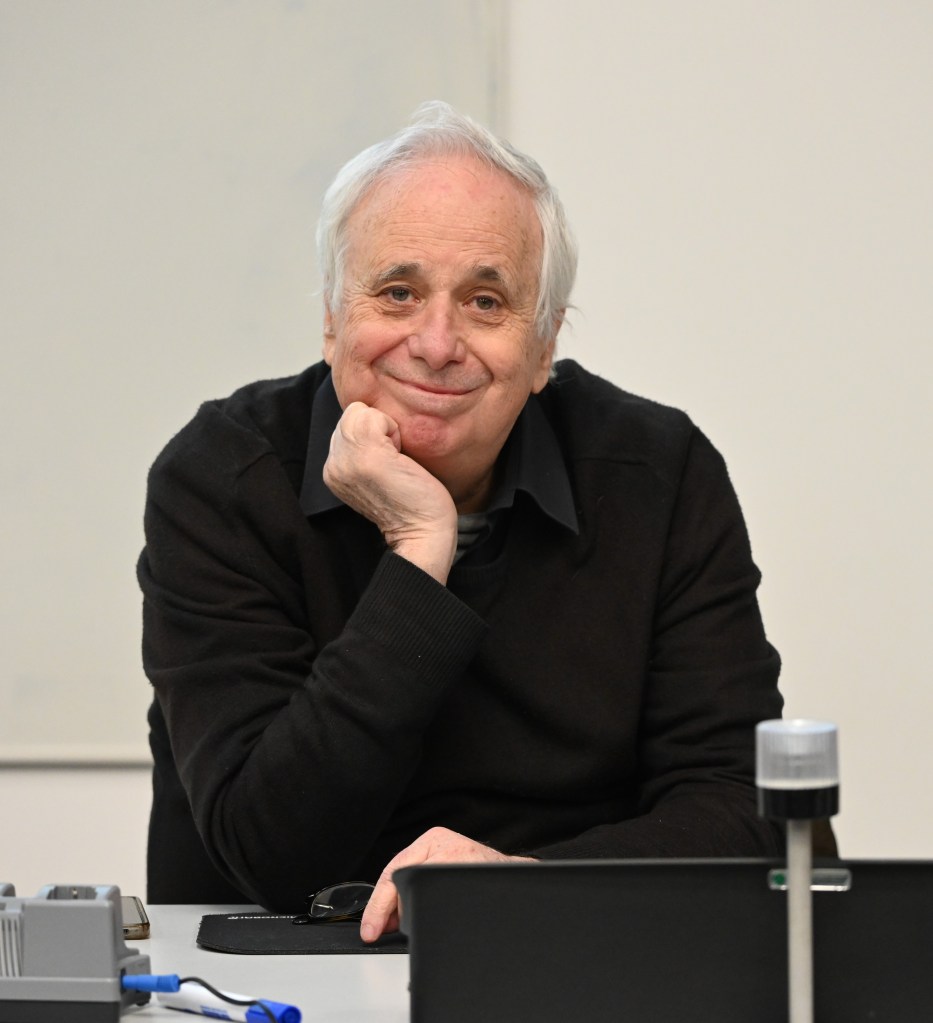
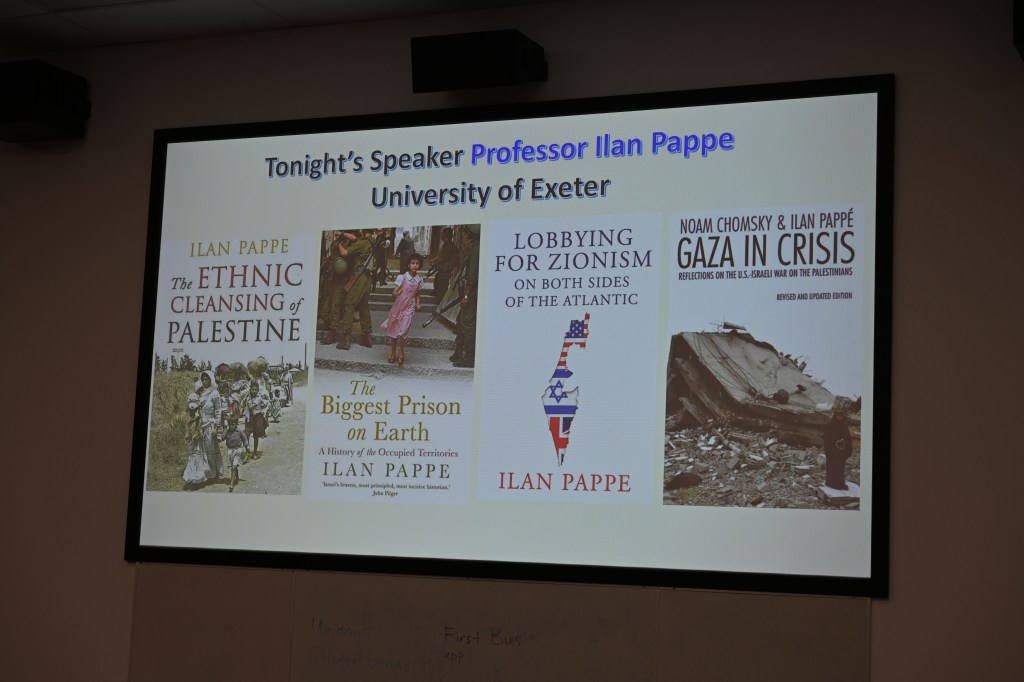
Last week the Bristol Branch of the HA hosted a highly relevant and thoughtful lecture by Ilan Pappe. The focus was Palestine but the lecture was also about the duty of historians to uncover the truth and challenge the version of events they are given. Professor Pappe argued that many of the politicians and diplomats he had met despite their sincere aim to bring peace to the region knew so little of its history and did not know what they did not know. Professor Pappe a Jewish historian trained in Israel and Oxford who served in the Yom Kippur War worked through three examples of how Palestinian history had been distorted to create a particular narrative and justification.
The first was the way both Evangelical Christians and Zionists from the 19th century onwards had wiped the Palestinian community from the history of the region from the first century AD (CE) to 1900. They presented the region as a desert or black hole with no culture or society where nothing had happened for two thousand years except for the Crusades.
The second abuse is in the way Zionism and the creation of the Israeli state was presented and its links to the end of European colonialism in the 20th century which resulted in the ethnic cleansing of Palestine in 1948. The role of European nations and the USA and the parallels between the displacement of other native people like South Africans and the Jews own experience in nationalist Europe were explored. A false history was developed of links between the Nazis and the Palestinians and a pastoral people were presented as terrorists involved in guerrilla warfare simply because this was their ‘culture’. The movement of communities turning Palestinians into refugees in 1948 (the Nakba) was re-written with no explanation for the motivation of the Palestinians.
Both these contradictory narratives of Palestine as an empty place and the Palestinians as Anti-Semitic terrorists who had made themselves refugees had already been challenged by scholars like Edward Sahid. The vibrant culture of Palestine with its own urban elite was now well documented.
Professor Pappe then linked his lecture to the third abuse of history with the most recent events by looking at what had happened in Israel, particularly in Gaza in the 21st century and the events of 7th October 2023. The origins of Hamas was linked to the Nakba of 1948 and the massive expulsion which had created the Gaza strip, the “largest refugee camp in the world” in what had been a seaside town while other Palestinians had taken refuge in Lebanon or the West Bank. The area around Gaza saw the destruction of eleven Palestinian towns and the building of eleven kibbutz. The bombing of Gaza in 2006, 2009, 2012 and 2014 by F16 bombers had increased the trauma of living in Gaza. This was the background to the terrible events of the last four months.
In the long-term Israel can be seen as yet another European colony on the Eastern shores of the Mediterranean. It is increasingly isolated and beleaguered.
This impressive lecture was followed by testimony from members of the audience with roots in the region and questions about the future of Israel.
After 90 minutes of lecture and Q&A our audience of well over a hundred were still asking questions until the building closed.

Wednesday 13th December 2023.
Robert Bickers gave a fascinating lecture on how the European powers led by Britain took control of much of China starting with the notorious Opium wars in the 1840s.
He began the lecture by getting us to imagine what it would be like if China had taken control of Spike Island in Bristol. Chinese police patrolled the harbour area and Chinese warships took control of the Severn estuary.
At the end of the eighteenth century Imperial China was dismissive of the British Macartney embassy. What could Europe offer China? Within a few decades China was bullied into granting concessions that left her dealing with not one colonial master but several. Almost all China’s ports came under European control.
The British took control of several treaty ports including Hong Kong as a result of the Opium Wars of 1839-42 and 1856-60. In the second war the French also gained access to Chinese ports. The ‘century of humiliation’ saw a whole host of European powers such as Russia, Germany, Austria-Hungary, Italy and even Belgium take control of territories and railways across China. By the twentieth century the Japanese had joined the scramble for concessions. The Qing/Manchu dynasty not only faced external threats but for two decades in the 1850s and 1860s the Taiping Rebellion nearly destroyed the Imperial regime.
Robert Bickers used a wide range of photographs to show how the Europeans became a privileged elite in China’s ports. Many had little contact with Chinese people preferring to live in their colonial bubbles. They had their own houses, schools, churches and sports clubs. They used their own colonial police and their navies patrolled the rivers and coastlines.
We were shown a range of monuments erected in Chinese cities to European soldiers, diplomats, civil servants and missionaries. The most notorious was the diplomat Harry Parkes who believed it was his mission to bring trade and civilisation to East Asia. Many Europeans (Taipans) exploited China and established commercial enterprises that are still powerful today. Jardine Matheson were infamous in this respect.
Some Europeans showed more respect for China. Sir Robert Hart was the most influential European in China. He ran the Imperial customs service from 1863 until 1911.
It all came to an end with the Japanese invasions of 1937 and 1942 followed by the 1949 Communist revolution.
Robert Bickers finished the lecture with some local connections. Tyntesfield House was built with the profits from the guano trade but did we know that the guano was ‘mined’ by indentured Chinese labour?. Imperial Tobacco had factories in China. The bell in Bristol City Museum was looted from China. George Muller sent missionaries to China.
The audience of 40 were extremely appreciative of Robert’s excellent lecture.
Wednesday 15th November 2023
The Bristol heat of the Historical Association Great Debate
Which historical place or person from your local area deserves greater recognition?
There were ten candidates from seven schools.
The winner was Alicia Morgan from Clifton College who presented the case for Carmen Beckford, black activist in Bristol and one of the founders of St Pauls Carnival. Carmen’s incredible community work led her to become the first Black recipient of an MBE in the South West.
There were two runners up. Arthur Fisher from Beechen Cliff School presented the case for the Bath Pavilion. Lily Wiltshire presented the case for RAF Locking.
A big thanks to all the students who took part. Many of them had travelled a great distance. Thank you to their teachers and parents.
This year the three judges were Professor Ronald Hutton, Clare Deering and Eugene Byrne.
Professor Hilary Carey University of Bristol 8th November 2023
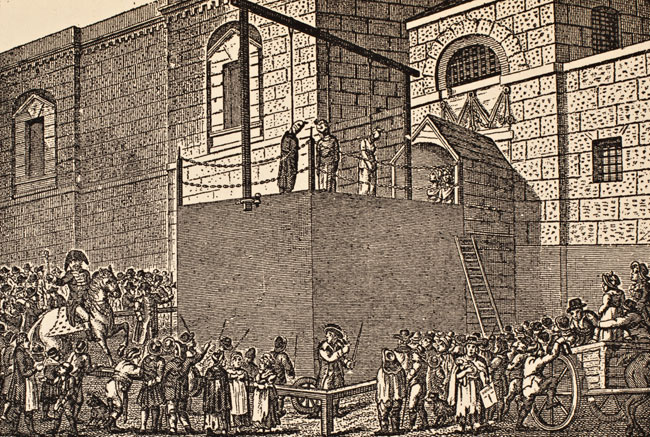
Professor Carey gave a fascinating lecture on the special execution sermons given by prison chaplains known as ordinaries each Sunday at Newgate Prison before the public executions of condemned prisoners. Her lecture covered the period 1789-1868 during which 657 souls were executed. She explained the duties of the “ordinaries” who were relatively well paid prison chaplains. The nature of the sermons they gave. How prisoners behaved showing penitence or resistance to these execution sermons and how the practice was reformed and eventually abolished. During the office of two ordinaries Brownlow Forde and Horace Cotton there were 548 executions.
These executions were very different from our pre-conceptions of hangings. Often, they were done in batches with six condemned prisoners for various offences all executed at once. The crowds at these executions were often large. In 1868 200 Irish turned up for the execution of a Fenian (Michael Barrett) who almost escaped into the crowd. Common offences were what today would be called “white collar” crimes like forgeries or utterers who passed on forged notes. Murderers were allowed to exempt themselves from the sermons but those prisoners who attended were grouped around a coffin. As well as their families the congregation for the sermon paid tickets to attend and were often made up of bankers from the City of London. Professor Carey used 19th century newspapers including the reports of the young Charles Dickens (Boz) to gain the texts of these sermons. Clearly the public had a taste for reading about these crimes and executions. Her visual sources included prints by Hogarth and the ‘Microcosm of London’ illustrated by Thomas Rowlandson. The penitence and resistance of prisoners was fascinating. The Cato Street conspirators (1820), all atheists refused to recognise the authority of the courts, the sermon or the executioner. Other prisoners showed conspicuous piety seizing the coffin at the sermon and declaring their regrets. Others dressed in white like martyrs. The logic behind the penitence was that some of these prisoners’ sentences were commuted even at the last minute on the scaffold.
The last public execution took place at Newgate in 1868 but it would be another 96 years before execution in Britain would be abolished. Our audience as usual supplied some thought provoking questions.

 Bristol Historical Association