LIFE IN A CHOCOLATE FACTORY.

Steve Carpenter’s visit to Ashton Gate Primary School 2nd November 2023

The Bristol Historical Association sent Steve Carpenter to Ashton Gate Primary School to talk about the Frys (Cadbury) chocolate factory at Somerdale. Steve worked in maintenance at the factory from 1975 until 1981. The children were eager to know how chocolate was made. Of particular interest was what do you do with waste chocolate and exactly how much chocolate were Fry’s workers allowed to eat. Although Frys merged with Cadbury in 1919, the factory at Somerdale did not change its name until 1981.

Thank you to Rachael Herbert who has an award winning history curriculum at the school. The children have been learning about the history of Fry’s chocolate.

Rob BELL 1952-2023

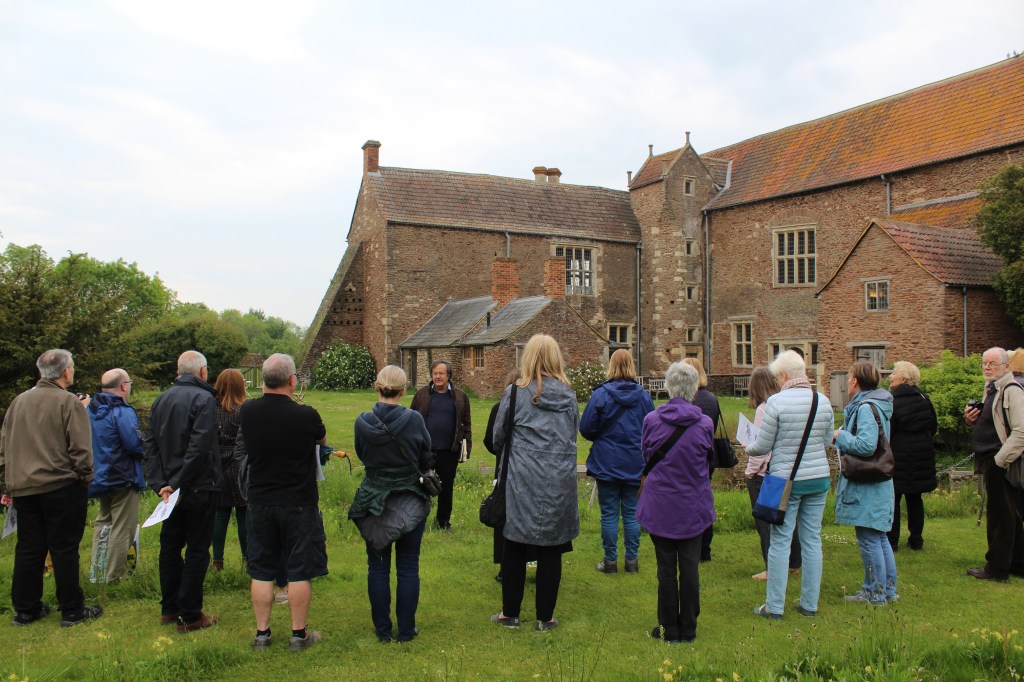
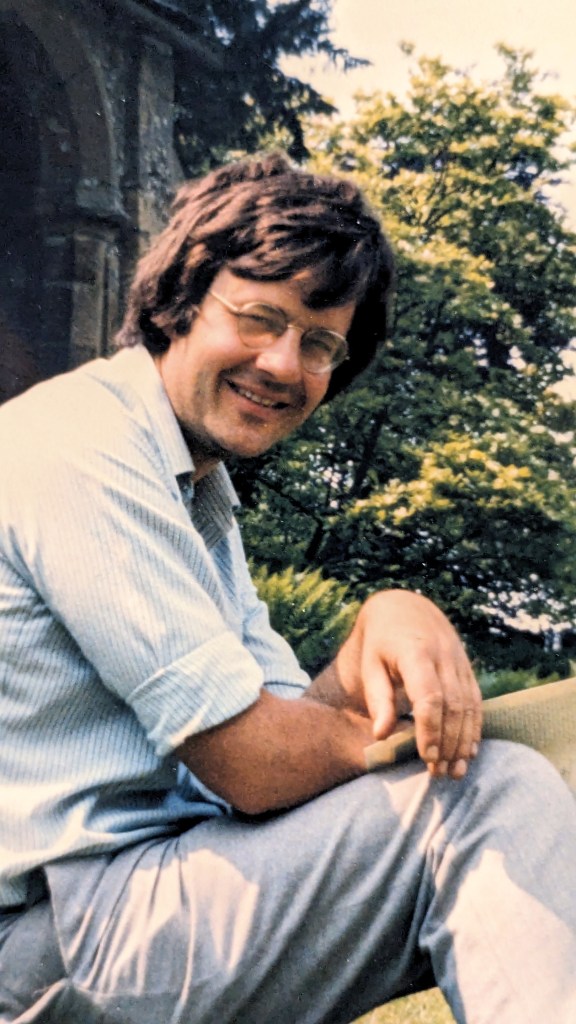
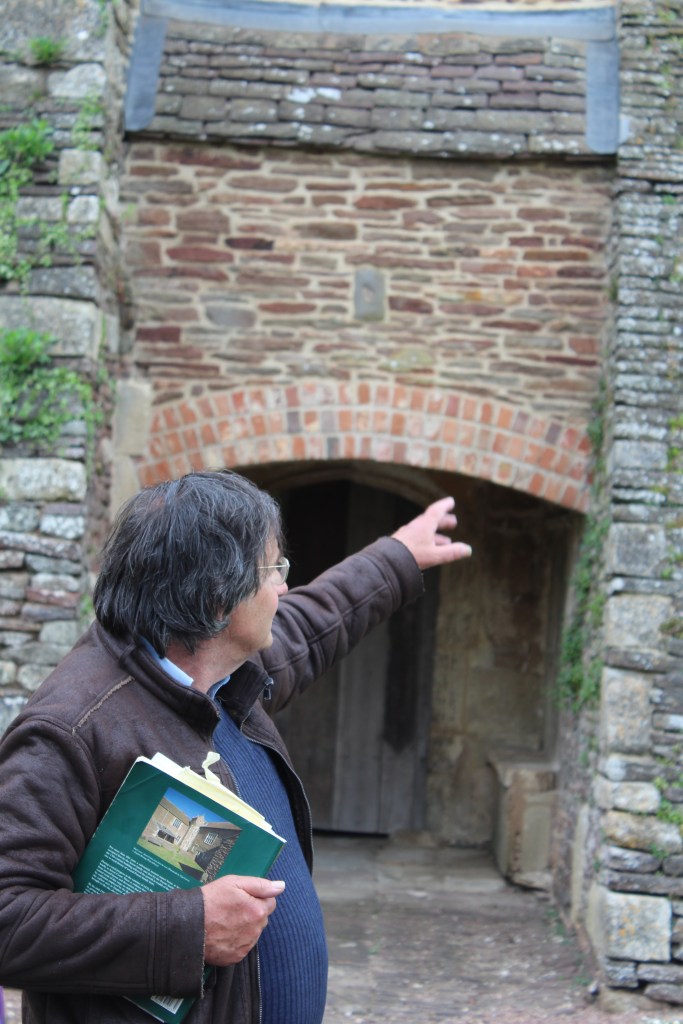
It is with great sadness that we announce the death of Rob Bell. Many of you will remember Rob as the very enthusiastic guide at Acton Court when we did our tours in May 2019 and June 2022. Rob was an archaeologist all his life. Rob will be best remembered for his work at Acton Court, where he spent three years in the 1980s working with a large team of archaeologists to unravel the history of the house. The result of the work was the excellent ‘Acton Court: The Evolution of an Early Tudor Courtier’s House’, which he co-wrote with buildings historian Kirsty Rodwell, and it will forever be a great tribute to him.

His funeral was in Tetbury on Friday 27th October. A large number of archaeologist friends attended the funeral. As an old friend I was asked to deliver the eulogy.

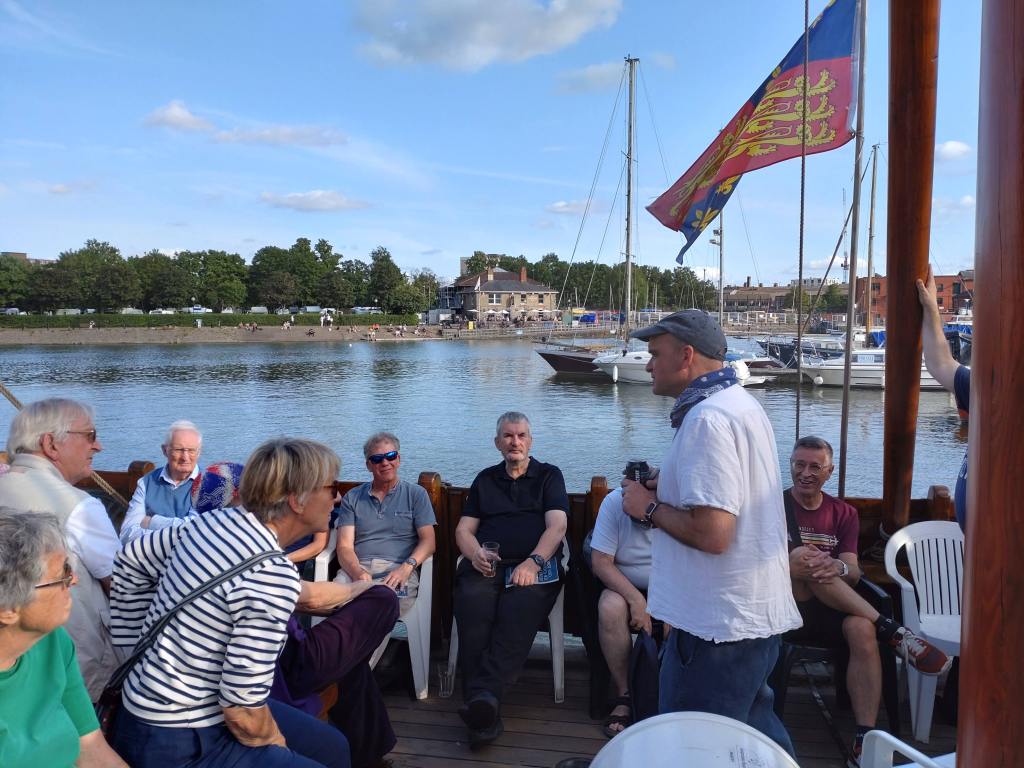
I have attached a few photographs.

Rob Pritchard

The impact of the 1984-85 Miners’ Strike on mining communities and their families.

Professor Robert Gildea

Our first lecture of 2023-24 focused on the communities affected by the Miners’ Strike of 1984-85.

This fascinating and at times very moving lecture looked at how an industry that once employed a million men was defeated in a long-drawn-out dispute in the mid 1980’s.  The lecture highlighted how close knit communities were split and brought down.

Professor Gildea has based his new book on hundreds of interviews he did with miners, their wives and families.

He started the talk by describing the lives of miners. There were the boys who left school on a Friday and were down the pit by the following Monday. Many married young. Miners often drank and gambled as a compensation for the dangerous work they did. It was their wives who controlled the family budget and held the families together. Mining communities relied on organisations like the Miners Welfare.

During the struggle communities were split especially in Nottinghamshire. Many of the striking miners were sacked for the smallest offences. One miner was sacked for doing a v sign to a coachload of working miners. Communities survived by setting up soup kitchens and organizing food parcels. Women’s rallies were described in detail and without sentimentality.  

After the strike pit closures inevitably destroyed miners’ lives even further. Some skilled miners were able to find work. Many more eked out an existence in the gig economy. Many striking miners found themselves unfairly imprisoned and blacklisted. Others were sucked into drug addiction. Families collapsed under the pressure while others reinvented themselves like Sian James the Labour MP for Swansea East. Many of the survivors were determined to save their communities.  It was a complex and unfinished story.

This lecture was more than a narrative of a momentous part of the 1980’s. It was real insight into the methodology of Social History. Based on the oral history project carried out since 2013 this told the history of the dispute and its aftermath from the bottom up; from the perspective of the marginalized losers of the dispute rather than the government. Professor Gildea shared some of his interviews across the six main coalfields.  Miners and wives and their families were interviewed.  Professor Gildea described this strike as part of the “unmaking of the English Working Class” in contrast to EP Thompson’s famous work.  The project’s aim was to record for communities their voices and their story and the original interviews are being digitized and kept in the British Library archives.  Our audience responded with many thoughtful questions and we ran out time for all of them to be answered. 
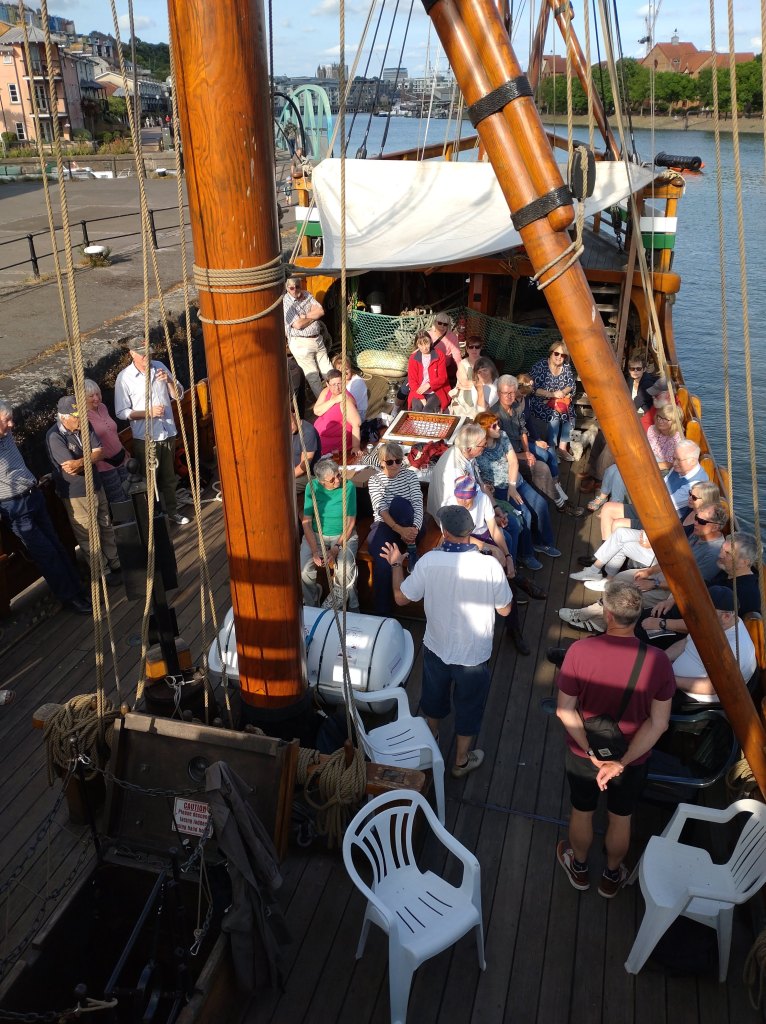
Primary School Cream Tea Event. Wednesday 12th July.

Fourteen teachers attended our last event of the year. Mollie Burden and Rachael Herbert gave a delightful talk about the award winning history curriculum at Ashton Gate Primary School. We particularly loved their use of Bristol’s history including such topics as Fry’s chocolate, Brunel’s ships and the 1963 Bristol bus boycott. Dr Sarah Whitehouse gave a talk about ‘teaching tolerance in troubled times’ which led to a lively discussion about such topics as the fall of Colston. It was a lovely way to end the year.

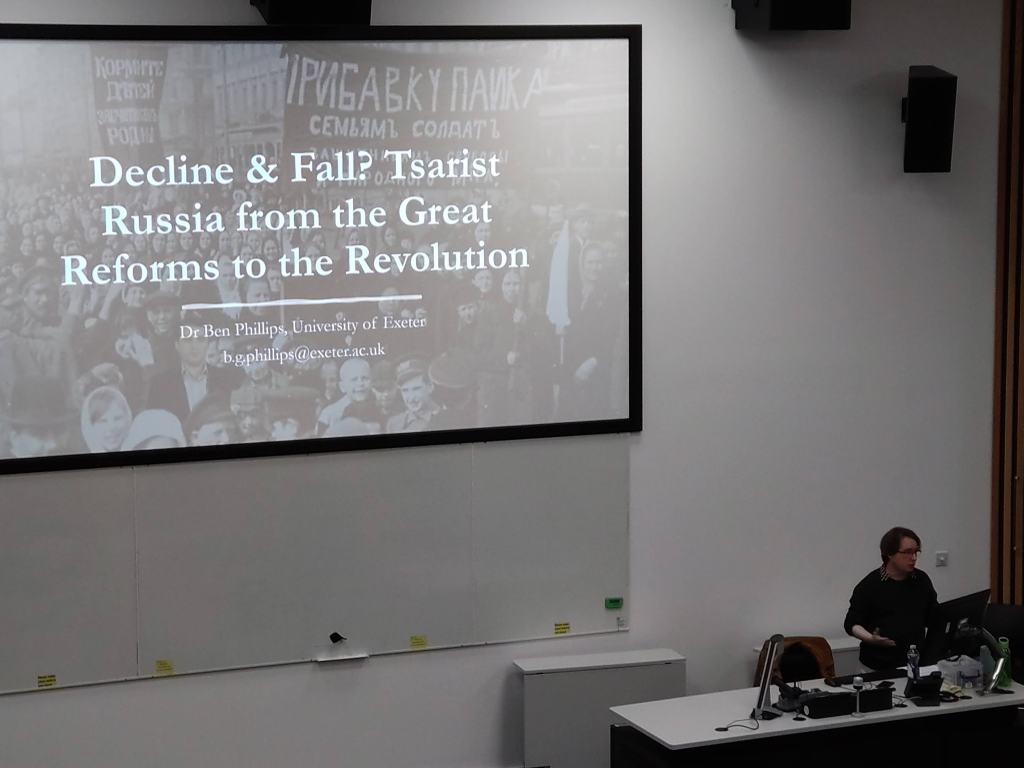
Ben Phillips. 7th June 2023. Tsarist Russia

Sixty six people attended Ben’s lecture including students from seven schools. Ben’s lecture looked at the arguments around the fall of Tsarism. The optimists argue that the regime could have been saved were it not for the First World War. The pessimists argue that it was doomed. English absolutism was destroyed at the end of the seventeenth century and French absolutism at the end of the eighteenth century. The Russian victory over Napoleon lulled the Tsars into a false sense of security. Rather than looking at the characters of individual Tsars, Ben chose to examine the problems caused by social and economic upheaval, defeat in war, non-Russian nationalism and revolutionary agitation. He examined the role of key ministers such as Witte and Pobedonostsev. The emancipation of the serfs in 1861 had many unforeseen consequences not least the further impoverishment of the peasants and the alienation of the nobility and gentry. Ben suggested the Polish revolt of 1863 was another warning that went unheeded. In the 1905 revolution many of the key areas of unrest were in non-Russian areas of the empire.
Thank you to Ben for putting Tsarist Russia into perspective and for coming all the way from Exeter.

Bristol HA Vickers Machine Gun Crew Visit.

Sunday 28th May 2023.

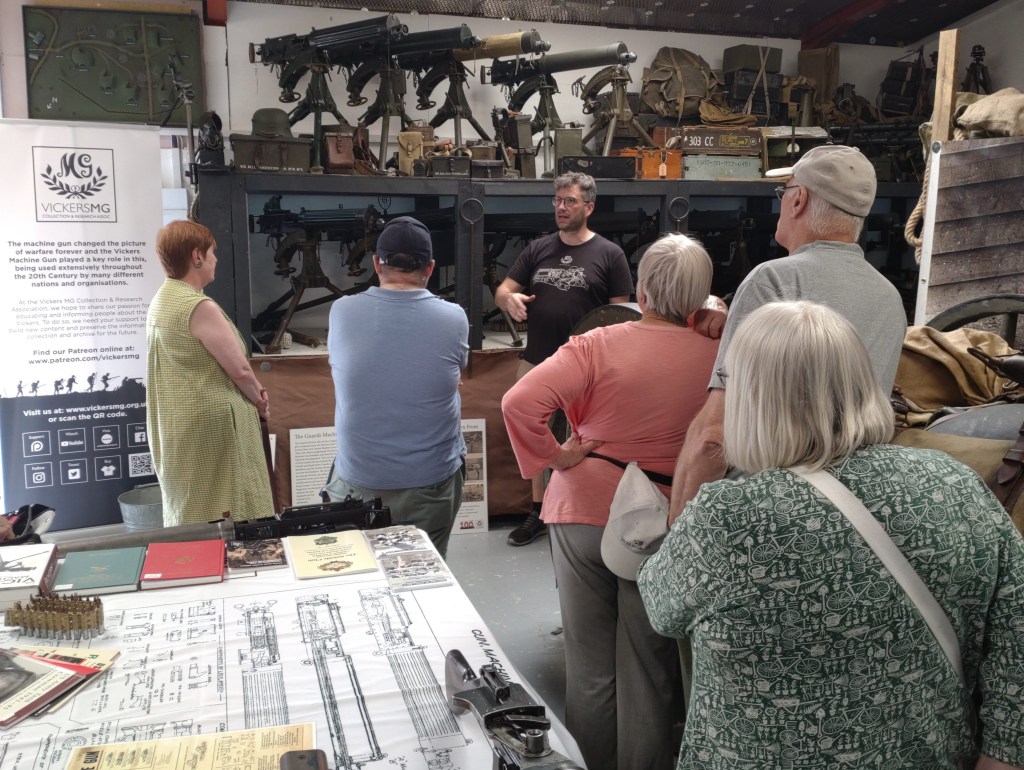
A dozen Bristol HA members visited the Vickers Machine Gun collection at a secret location in Wiltshire. For security reasons we thought we might have to be blindfolded for the last part of the journey. A big thanks to Dave Voisey for inviting us and Rich Fisher for showing us around.

In the three hour visit Rich treated us to live firing demonstrations using a Vickers MG, Bren gun and Lee Enfield. The Vickers machine gun was used by the British Army from 1912 until 1968. Rich gave a brilliant talk about the manufacturing process. This included how the gun was simplified to cope with a shortage of skilled labour. The mighty Vickers company lasted from 1828 until 1999 and built guns, ships, aircraft and much more. Rich showed us how the gun was assembled using parts from all over the country including ammunition belts made by a curtain tape manufacturer. Before 1914 the Germans had to pay Vickers who held the licence for the Maxim-Vickers gun when they produced their version of the gun.

Vickers machine guns were a major British export. Rich showed us Vickers machine guns that had been supplied to many countries including the USA, Egypt, Turkey and Chile. The machinations of the arms trade in the 1930s was investigated by the Fabian Society who showed how the arms manufacturers, banks and diplomatic service worked together.

In the First World War a Vickers machine gun had a crew of eight. Richard went through the different skills that were required by members of the team which included a numerate rangefinder, an athletic ammunition carrier and horse handlers. When the gun jammed (we were firing blanks) he showed us how it had to be rapidly dismantled and reassembled.

The museum is a kind of prism through which we can study many aspects of British history in the first half of the twentieth century. It was quite a unique visit and the whole Bristol HA crew were captivated by Rich’s demonstrations and explanations.

Dear members

We are very sorry to say that due to unforeseen circumstances our lecturer has had to postpone/cancel the lecture on Tsarist Russia on Wednesday 17th May.

We are hoping that we can reschedule it for later in the term. Please keep an eye on our website.