12th October Wine Through Time: A Vinous History of Bristol. Dr Evan Jones

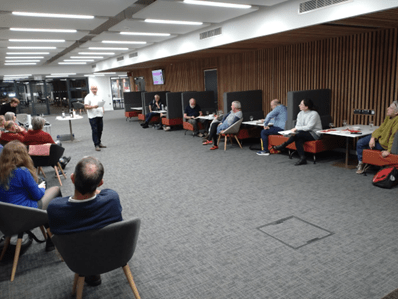
Last Wednesday’s long awaited talk for members by Dr Evan Jones was definitely worth the wait.  Evan has already given us talks on death and disease and led a walk that illustrated the sex lives of Bristolians of the early modern period. What was awaiting us this time? He began with the origins of the wine connection, from the Roman Empire when wine drinking was a symbol of Imperial sophistication and wines was shipped over in amphorae. The extent of alcohol consumption during the medieval and early Modern times was a surprise to many of our members and especially that in Bristol much of this was wine. The cost of moving it elsewhere in the country by land meant that in Bristol it was a relatively cheaper drink and from Norman times it was regularly coming into the city (from Bordeaux and later Spain and Portugal). So it was not just the drink of the aristocracy. After members tasted small amounts of first the adulterated mixture that resembled those drunk by Bristolians in the thirteenth century we moved on to stronger and richer wines accompanied by French, Spanish wines and English cheeses. We also learnt the about the use of barrels in shipping wine and the amount of alcohol poisoning that went on when men sought to salvage the cargo of shipwrecks as well as the derivation of the name of Bristol’s most famous sherry (Cream as well as Milk). The social history of drinking is clearly a major field of research.  By the end of the talk we had had not only enlightening talk but a friendly meeting of members and surprisingly no-one spilt anything.

NEW SEASON. Wednesday 28th SEptember.

Jogger, Mugger and Hipster: Gentrification in late 20th century Britain

Professor Peter Mandler

Peter Mandler a renowned cultural historian at Cambridge University opened our sixth year of the new Bristol Branch of the Historical Association.  In forty five minutes he gave a wide ranging and fascinating exploration of the changing demography of Britain’s post-war cities.  He introduced the Jogger a now widely accepted part of urban life as a once “UnEnglish” even preposterous figure.  Originally middle aged men  trying to ward off heart disease these exercisers had become highly visible in our cities by the 1970’s.  These pioneers were often graduates of our expanding universities who now choose to live in the inner city for longer and by 1978 had been joined by female joggers.  Their uniform of sweat shirts and trainers moved from running to protect their hearts to running for their minds.  We got use to them hogging our cities’ pavements.

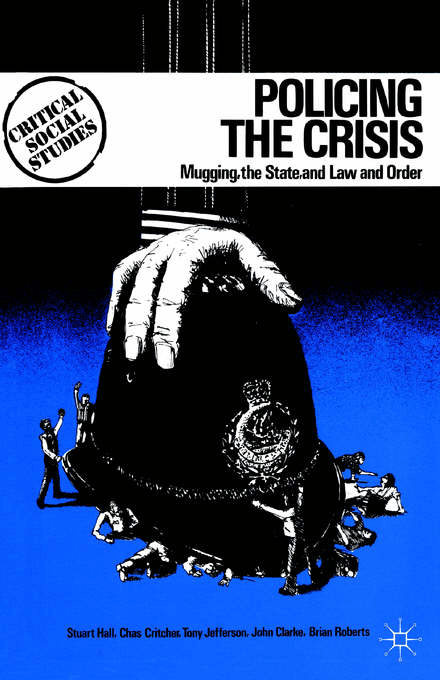
Another media trope “the mugger” was seen as part of the moral panic that often surrounded reporting on our inner cities. While the media presented street crime rising and the victims being aging, poorer white women, the work of Stuart Hall and other sociologists helped to present a more accurate account of crime and robbery in the 1970’s suggesting black young men were being presented as scapegoats in  the zones of transition of the inner city. 

The final figure the “Hipster” often seen as figure of fun and even a pretentious phoney by journalists was presented by Professor Mandler as part of the way cities evolved in the noughties.  These socially aspirant young people had well paid jobs and were part of making cities more viable even in the more unattractive parts of London . 

This funny and insightful lecture was followed by lots of lively questions from the audience many contributing their own experiences as urban dwellers in our city.  

WANTED. INFORMATION ABOUT THE AVON STREET GAS WORKS.

The University of Bristol have a new project researching Bristol’s industrial history. A report written by Dr James Watts and Lena Ferriday has just been published, uncovering the history of the former gasworks, 65 Avon Street, St Philips. The company introduced gas and gas lighting to the city, and this research highlights both the positive and negative impacts of this new technology for the city: https://www.bristol.ac.uk/media-library/sites/bristol-digital-futures-institute/documents/Bristols%20Gas%20Industry%20BDFI%20Report.pdf.

The university is now appealing for local people to come forward with memories, images, documents or artefacts associated with the Gas Shed or Retort House, the former headquarters of the Bristol Gas Company or its later use as the Vauxhall Drive Garage. They have a survey for people to share stories and footage set up here: https://forms.office.com/r/qXjipHqVip. They are also looking for participants in oral history interviews, who can sign up here: https://forms.office.com/r/AHubwNqV96.

There is more information on the project here: https://www.bristol.ac.uk/news/2022/june/innovation-hub-history.html

ACTON COURT. 19th June 2022

Our last event of the 2021-22 season was a tour of Acton Court with Rob Bell. The fact that this Tudor house survives is a miracle. When it was discovered it was on the verge of collapse. Rob Bell and Kirsty Rodwell led the team that excavated the site in the 1980s. The house was owned by the Poyntze family. It is a perfect example of how English architecture moved from the late Gothic style in the 1530s to the Renaissance in the 1550s.

The high point in the house’s history was the 1535 visit of Henry VIII and Anne Boleyn. The East Wing was specially built for their weekend visit. Given the speed and method of construction (nine months) it is amazing it did not collapse whilst his majesty was staying there. Unfortunately for the Poyntze family a combination of overspending on the house and backing the wrong side in 1550s led to their decline. By 1680 the family were bankrupt.

We were extremely lucky to be shown around the house by such an expert.