
25th September 2024
118 attended our first lecture.
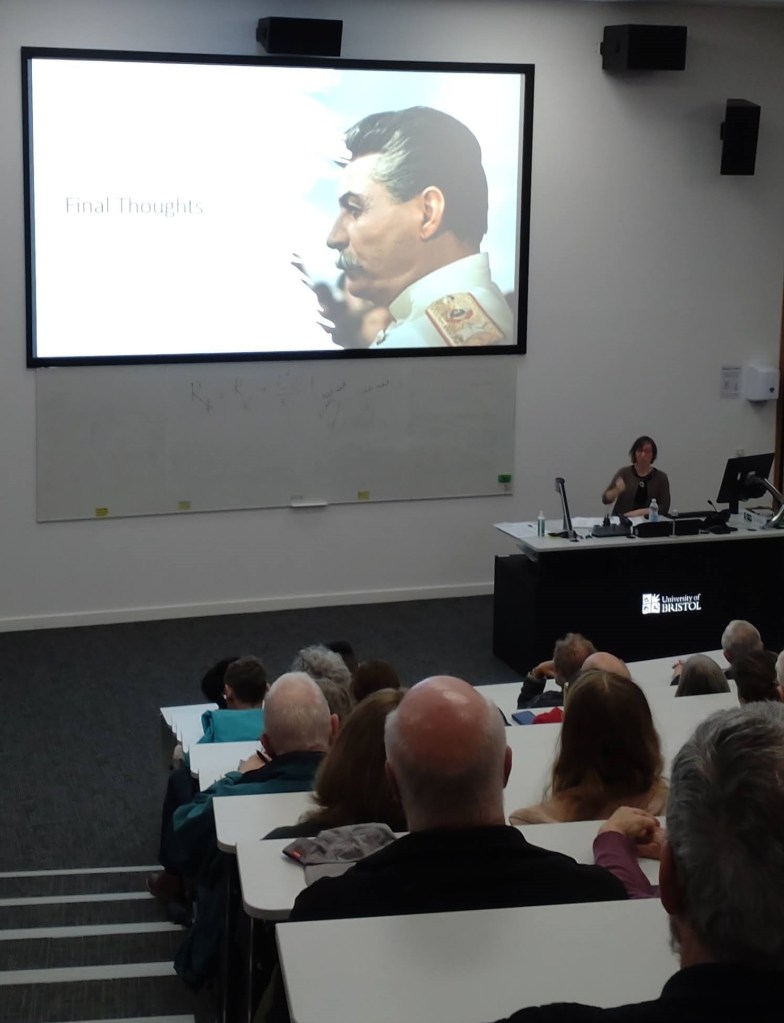
Dr Claire Knight gave a fascinating lecture on the how the personality cult around Stalin used cinema to promote Stalin as leader. Despite a few technical hiccups our massive audience of members, students and guests were entertained by film clips and extracts from letters to understand the impact these films made on Soviet citizens. Many Western film critics dismissed these films as meaningless corny propaganda. However, a study of them proved a real insight into how Soviet citizens attitudes to their leader changed over the decades. Claire began with the expensive technicolour film The Fall of Berlin, where Stalin features only in a cameo role.
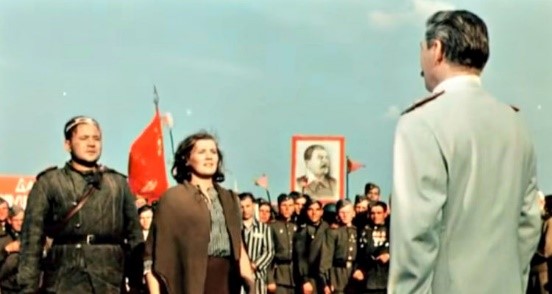
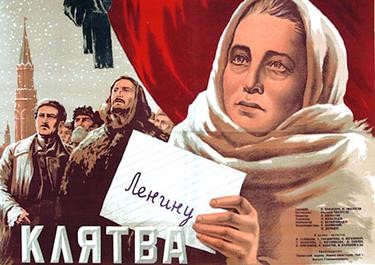
She examined his role as the loyal comrade in Lenin in October in constant contact with Lenin and The Vow (1946) where he is marked out as Lenin ‘mark 2’ fulfilling Lenin’s role after his death but providing hundreds of 1000s of tractors where Lenin had only promised tens of 1,000s.
Claire went on to show how the ‘Great Patriotic War 1941-45’, changed the image of Stalin. He is was no longer just Lenin’s disciple but ‘The Lone leader.’ There were endless runs of posters portraying Stalin as the great general and like Tsars before him he was depicted as the all knowing leader as in the film The Battle of Stalingrad. Claire explained how Socialist Realism was used to portray the image of Stalin often using the same actors and even the same lines to tell similar stories decades apart.
A new image of Stalin as the ‘Wise Leader’ was also given to cinema audiences. Among the most eccentric of these, The Peasant (1935) featured a cartoon image of Stalin alongside a peasant mother and her tractor driving husband and her new baby. The director Ermler believed in Freuds psychological theories and suggested the film would not have got through later Soviet censors. Among Claire insights into the images of Stalin in posters and films was his depiction not as a father to a specific child but his role as Father of Nations and groups of children.
In the final part of her lecture Claire examined the archive of letters which showed the reaction of citizens to the film The Fall of Berlin. The writers were unexpectedly hostile. They disliked the central character Alesha who they regarded as uneducated and not representative of modern Soviet citizens. The critiques asked for rewrites but they also made the point that they were not small children of the Great Father (Stalin) but more like adult children of an elderly parent. In her final thoughts Claire pointed out that these Soviet citizens, including the reviewers in the official paper Pravda, saw their role in the Great Patriotic War as central to its victory. The crude propaganda of the 1920s and 1930s was no longer acceptable and they used the language of Social Realism to pull apart the images of The Fall to Berlin. Again living under ‘Everyday Stalinism’ proves to be more complex than the old stereotypes of an absolute dictator.
 Bristol Historical Association